Personal letter ideas: five small reasons to put words on paper
Write a specific, warm personal letter with practical prompts, an adaptable example and a simple handwritten-style layout.
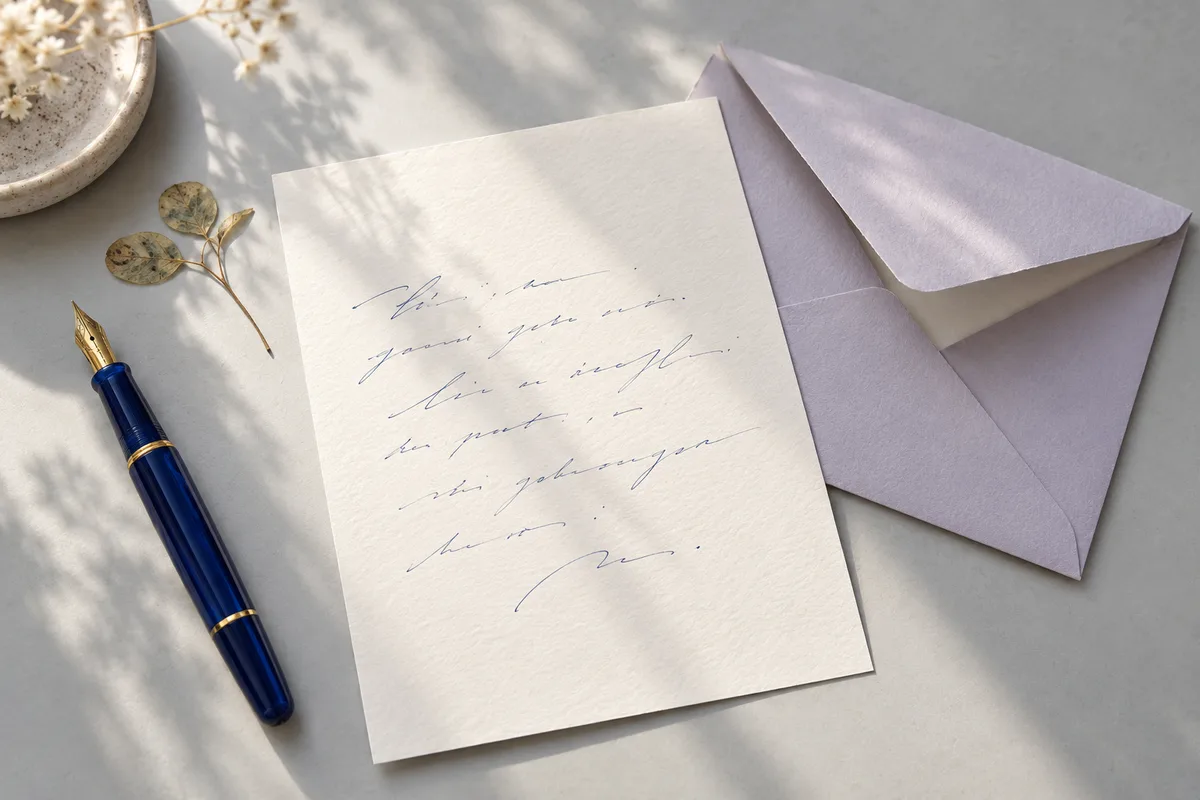
You do not need a major occasion to write a letter. A few specific sentences can make an ordinary day memorable, especially when they give someone a detail they can recognize. A handwritten-style page is one way to present those words thoughtfully. The message should still sound like you, and you can add a real signature after printing if you want a personal finishing touch.
1. Thank someone for a particular moment
Instead of opening with “Thank you for everything,” name one thing. Perhaps a friend stayed on the phone while you worked through a difficult decision. Perhaps a neighbor returned a parcel without being asked. Describe what happened, how it helped and what you appreciated. Specific gratitude gives the reader something concrete to remember.
Try this opening: “I keep thinking about the walk we took last Thursday. You gave me time to say things out loud without rushing to fix them.” You do not need to make the letter long. Two honest paragraphs can be enough.
2. Send an everyday update
A letter can be a small window into your week. Choose three details: something you noticed, something you tried and something you are looking forward to. A description of the light in your kitchen or a meal that almost worked can be more engaging than a summary of every appointment.
Invite a response with one easy question. “What have you been reading lately?” is gentler than a list of things the recipient must answer. Leave the ending open, especially if the person is busy or going through a demanding period.
3. Mark a quiet achievement
Not every celebration needs a milestone birthday or a promotion. Someone may have finished a difficult project, returned to a hobby or simply kept going. Acknowledge the effort you actually saw. Avoid inventing a lesson about their experience or telling them how they should feel.
For example: “I saw how patiently you kept returning to that draft. I hope you get a moment to enjoy having finished it.” Let your encouragement stay attached to a real observation.
4. Write to your future self
Use a daily journal page for a letter you will read in a month. Describe your current routine, a question you are working through and one small hope. Date the page. This kind of letter does not need a polished conclusion; uncertainty can be part of the record.
Save the text somewhere outside the browser as well. A local draft is convenient for continuing a design, but it is not a durable archive of an important memory.
5. Make a simple invitation
An invitation can feel personal without becoming elaborate. Say what you would enjoy doing, give a practical date or a flexible window, and make it easy for the person to decline. “I would love to cook together one evening next month, if that sounds good to you” leaves more room than a demand disguised as a celebration.
Give the message a readable page
Start with the personal letter template. Keep a generous margin, short paragraphs and a clear closing. Read the draft aloud; if a phrase feels unnatural, simplify it. The personal letter guide offers a useful structure when you are unsure where to begin.
Choose a font that covers your language. Existing font files load locally in your browser; the studio does not turn handwriting photos into trained fonts. You can type, paste or import plain TXT text, up to 12,000 characters. Direct PDF and Word imports are not available.
PNG export saves the current page. For a longer letter, check every page and use the all-page print flow to save a PDF through your browser. Drafts do not sync to the cloud, and clearing browser data can remove them. Keep both your editable words and a finished export. Before mailing a printed copy, add the date and your own signature if you wish, then check the printing checklist.